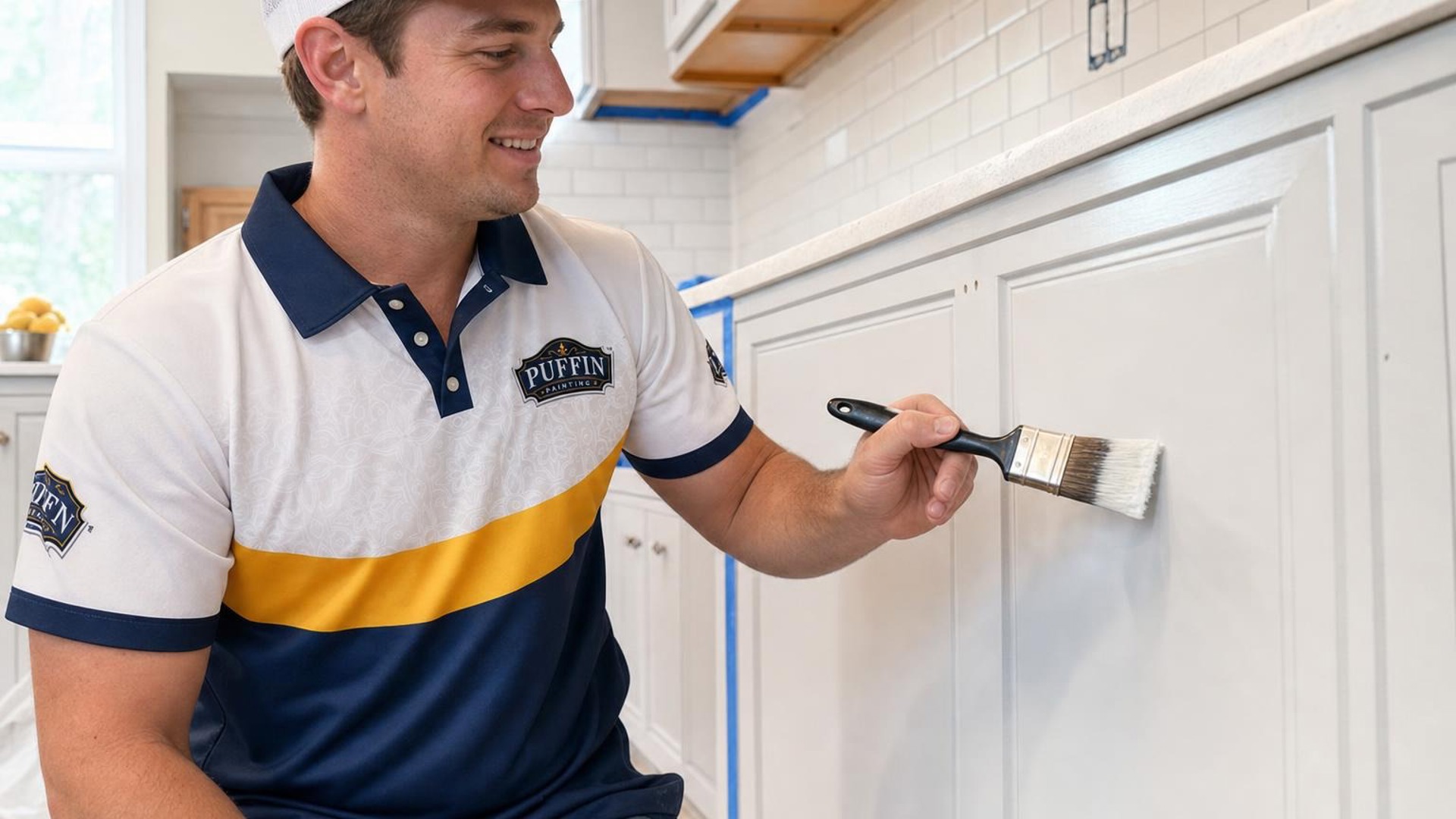
Cabinet painting can make a kitchen, bath, laundry room, or built-in feel updated without replacing the whole layout. The key is understanding the cabinet condition, finish expectations, and prep steps before work begins.
- Good Candidates Have Solid Boxes and Doors
- Prep Is the Difference
- The Estimate Should Set Expectations
- Frequently Asked Questions
Good Candidates Have Solid Boxes and Doors
Cabinet painting works best when the cabinet boxes, doors, and drawer fronts are structurally sound and the goal is a cleaner color or finish.
If doors are failing, veneer is peeling, or hardware changes require extra filling, those details should be discussed before the project is priced.
Prep Is the Difference
Cabinets collect grease, hand oils, cleaners, and daily wear. Cleaning, sanding, bonding, priming, and controlled coating steps help the new finish hold up better.
A rushed cabinet job can look good for a short time and then show chips, flashing, or adhesion problems where hands touch the surface most.
The Estimate Should Set Expectations
The estimate should clarify what gets painted, what hardware is removed or replaced, how doors are handled, and how the room will be protected.
Clear expectations make cabinet painting easier to compare against replacement, refacing, or a larger remodeling project.
Frequently Asked Questions
- Is cabinet painting cheaper than replacing cabinets?
- Can cabinet hardware be changed during painting?
- Does cabinet painting include doors and drawer fronts?
- Can I send photos before asking for an estimate?
- What should I include in a painting estimate request?
Is cabinet painting cheaper than replacing cabinets?
Usually, yes, but the right choice depends on the condition of the cabinets and the finish you want.
Can cabinet hardware be changed during painting?
Often yes. Hardware changes should be discussed early because new holes or old holes may need additional prep.
Does cabinet painting include doors and drawer fronts?
The scope should specify boxes, doors, drawer fronts, trim, panels, and any exposed sides before work starts.
Can I send photos before asking for an estimate?
Yes. Photos of the surfaces, problem areas, rooms, exterior details, or repair concerns can help Puffin Painting understand the project before the estimate conversation.
What should I include in a painting estimate request?
Include the address, project type, timing goals, surfaces involved, color questions, repair concerns, and any access details that could affect the work.
For a kitchen or built-in refresh, start with cabinet painting.