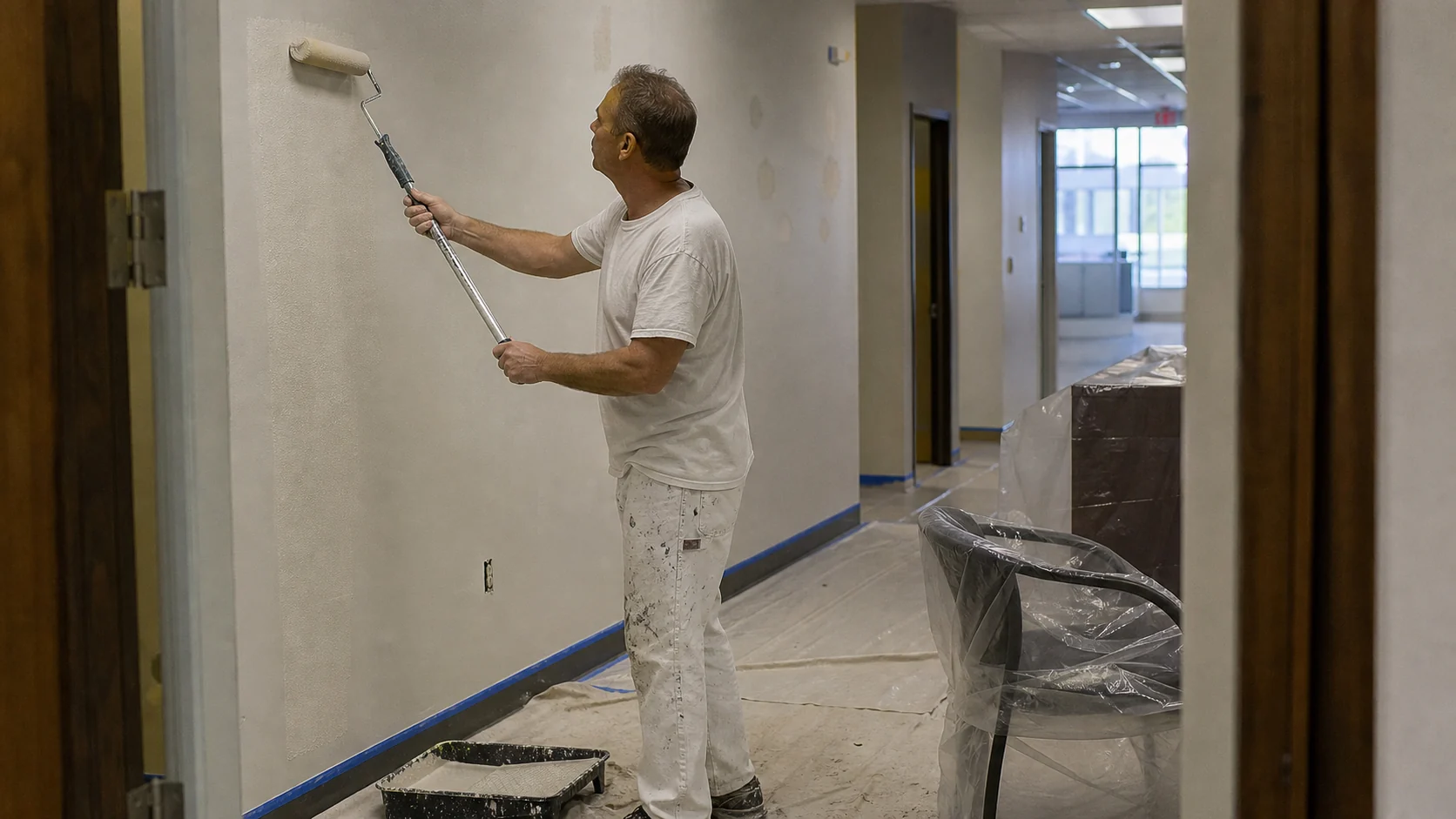
Commercial painting needs clean workmanship and practical scheduling. Whether the work is inside a customer-facing space or outside a business property, the plan should respect operations, access, safety, and the finished impression.
- Start With Access and Timing
- Interior and Exterior Needs Are Different
- A Clear Scope Helps Everyone
- Frequently Asked Questions
Start With Access and Timing
Commercial painting should clarify working hours, entry points, staging areas, drying time, and how the project affects staff, customers, tenants, or visitors.
That planning helps the work move without turning a normal business day into guesswork.
Interior and Exterior Needs Are Different
Commercial interior painting often focuses on protection, low disruption, and clean lines in offices, retail spaces, common areas, and occupied buildings.
Commercial exterior painting adds weather, access, curb appeal, signage, and visibility concerns to the project plan.
A Clear Scope Helps Everyone
The estimate should define surfaces, prep, repairs, coating approach, exclusions, schedule expectations, and communication during the job.
That shared understanding makes the project easier for owners, managers, and the painting crew.
Frequently Asked Questions
- Can commercial painting be scheduled around business hours?
- Do commercial projects include exterior work?
- What helps prepare for a commercial estimate?
- Can I send photos before asking for an estimate?
- What should I include in a painting estimate request?
Can commercial painting be scheduled around business hours?
Many projects can be planned around access and operating needs. Timing should be discussed during the estimate.
Do commercial projects include exterior work?
Yes. Puffin Painting handles commercial interior painting, commercial exterior painting, and broader commercial painting scopes.
What helps prepare for a commercial estimate?
Share the address, surfaces, access restrictions, timing needs, preferred contact, and any photos or notes about repairs.
Can I send photos before asking for an estimate?
Yes. Photos of the surfaces, problem areas, rooms, exterior details, or repair concerns can help Puffin Painting understand the project before the estimate conversation.
What should I include in a painting estimate request?
Include the address, project type, timing goals, surfaces involved, color questions, repair concerns, and any access details that could affect the work.
For business properties, start with commercial painting.