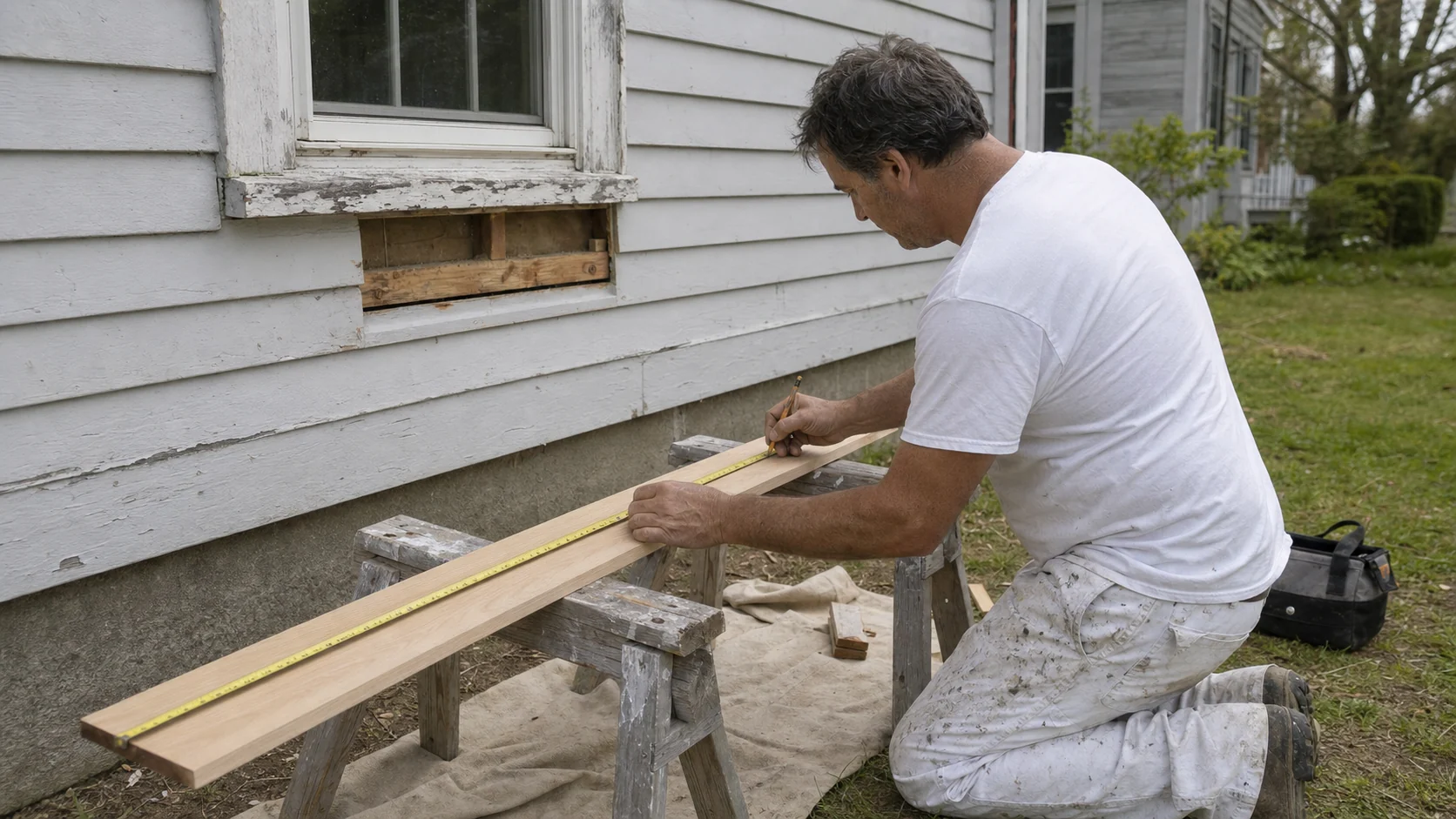
Exterior painting can refresh a property, but damaged siding and trim should be handled before the final coats go on. Repair work helps the paint look cleaner and protects the investment behind the finish.
- Paint Should Not Hide Damage
- Painting and Repair Should Work Together
- Small Repairs Can Prevent Bigger Rework
- Frequently Asked Questions
Paint Should Not Hide Damage
Soft trim, split boards, loose siding, failing caulk, and water-prone areas should be reviewed before coating. Trim repair and siding repair help set the project up properly.
Skipping visible repairs can make the finished paint job look uneven and may lead to faster failure in the same spots.
Painting and Repair Should Work Together
When repair and painting are planned together, the crew can think through materials, priming needs, caulk lines, and finish continuity.
That is especially important on older homes where small exterior details affect the whole finished look.
Small Repairs Can Prevent Bigger Rework
Addressing failing trim, seams, or siding before painting can reduce the chance of opening the project again soon after the finish is complete.
The estimate should explain which repairs are included and which issues may require a broader carpentry or exterior envelope solution.
Frequently Asked Questions
- Can Puffin Painting repair trim before painting?
- Can siding be painted after repair?
- Will repairs change the estimate?
- Can I send photos before asking for an estimate?
- What should I include in a painting estimate request?
Can Puffin Painting repair trim before painting?
Yes. Trim repair can be included when worn or damaged trim affects the painting scope.
Can siding be painted after repair?
Yes. Siding repair and exterior painting can be planned together when the surface is ready for coating.
Will repairs change the estimate?
Repairs should be identified and discussed during the estimate so the scope is clear before work begins.
Can I send photos before asking for an estimate?
Yes. Photos of the surfaces, problem areas, rooms, exterior details, or repair concerns can help Puffin Painting understand the project before the estimate conversation.
What should I include in a painting estimate request?
Include the address, project type, timing goals, surfaces involved, color questions, repair concerns, and any access details that could affect the work.
For exterior prep help, visit siding repair or trim repair.