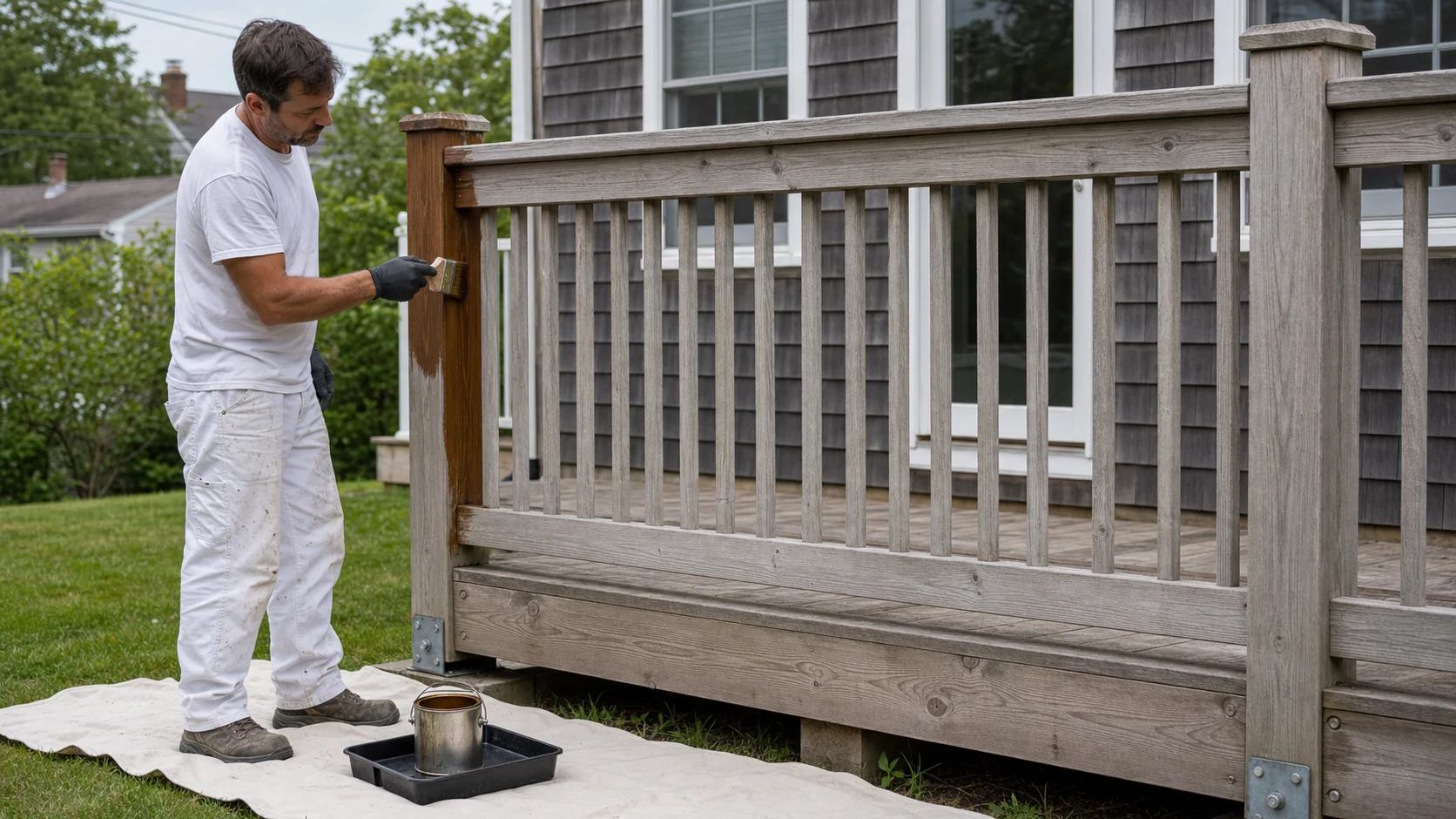
Decks and fences face sun, moisture, foot traffic, landscaping, and seasonal weather. Staining should be planned around wood condition, cleaning needs, drying time, and the look the property owner wants.
- Clean Wood Takes Finish Better
- Product Choice Changes the Look
- Maintenance Is Easier With a Plan
- Frequently Asked Questions
Clean Wood Takes Finish Better
Before deck staining or fence staining, the wood should be reviewed for dirt, mildew, loose coatings, weathering, and damaged boards.
Cleaning and drying time matter. Stain applied over trapped moisture or dirty wood can fail faster than expected.
Product Choice Changes the Look
Transparent, semi-transparent, semi-solid, and solid stain options each show the wood differently and require different maintenance expectations.
The right choice depends on the current condition of the wood, the color goal, exposure, and how much natural grain should remain visible.
Maintenance Is Easier With a Plan
Decks and fences usually need periodic maintenance, especially in exposed areas. A clear plan helps owners know what to watch for after the project is complete.
Puffin Painting can help decide whether cleaning, touch-ups, or a full staining project makes sense for the surface.
Frequently Asked Questions
- Can old stain be stained over?
- How dry should wood be before staining?
- Can decks and fences be done together?
- Can I send photos before asking for an estimate?
- What should I include in a painting estimate request?
Can old stain be stained over?
Sometimes, but the existing finish, adhesion, cleanliness, and desired color all need to be reviewed first.
How dry should wood be before staining?
Wood should have enough dry time for the product being used. Weather, shade, and wood condition all affect timing.
Can decks and fences be done together?
Yes. If both surfaces need attention, they can often be reviewed together during the estimate.
Can I send photos before asking for an estimate?
Yes. Photos of the surfaces, problem areas, rooms, exterior details, or repair concerns can help Puffin Painting understand the project before the estimate conversation.
What should I include in a painting estimate request?
Include the address, project type, timing goals, surfaces involved, color questions, repair concerns, and any access details that could affect the work.
For exterior wood care, review deck staining and fence staining.